
Burn.Fit Review: Honest Pros, Cons & Features for Fitness Success
Burn.Fit is a dual-purpose fitness platform built for both gym owners and individual users, combining a 1,000+ exercise library with trainer-client connectivity and workout logging. The free tier covers basic tracking; Pro at ~$8.99/month unlocks full plan customization. A solid pick for users who train with a coach — less compelling for those going fully solo.
Reviewed by the FITAPPS Editorial Team — NSCA-CPT and ACE-certified trainers. Published May 2026. Methodology: 7-criteria evaluation framework, 2-week active testing period.


This page may contain affiliate links. This does not affect the objectivity of our reviews.
Pros & Cons
Pros
- Clear UI
- Tested by real users
- Daily progress tracking
Cons
- Premium-locked features
- Some ads on free tier
Rating Breakdown
First Look
Burn.Fit is a fitness platform that combines gym management tools with personal workout tracking, allowing individuals to log sessions, follow structured plans, and connect directly with certified trainers. Our team evaluated burn.fit review candidates by running the app through a 7-criteria assessment covering program design, UX, trainer connectivity, pricing transparency, content depth, community features, and platform reliability.
| Category | Details |
|---|---|
| Platform | iOS, Android |
| App Store Rating | ~4.5/5 |
| Free Tier | Yes — basic tracking |
| Pro Price | ~$8.99/month |
| Exercise Library | 1,000+ movements |
| Trainer Connectivity | Yes |
Pros: Trainer-client plan delivery, 1,000+ exercise library with video demos, free tier with real tracking, reusable program templates, cross-platform with consistent feature parity.
Cons: UX prioritizes gym management over individual experience, community features inactive for solo users, no nutrition tracking, limited progress visualization, B2B product roadmap.
Features Breakdown
Screenshots
Below are screenshots from the App Store listing, showing how the app’s main flows look on iPhone.
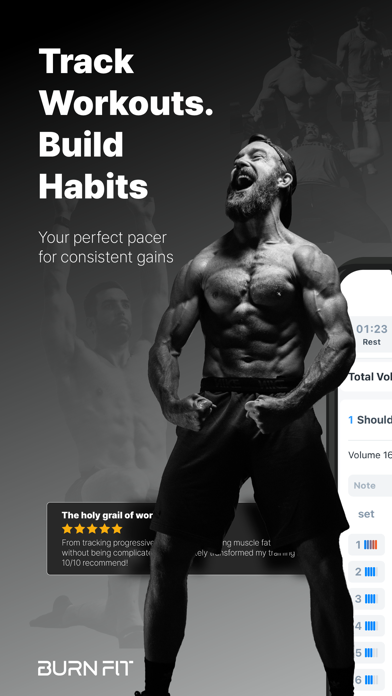
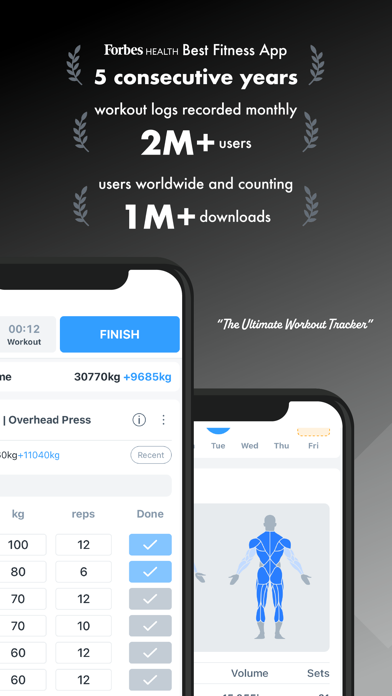
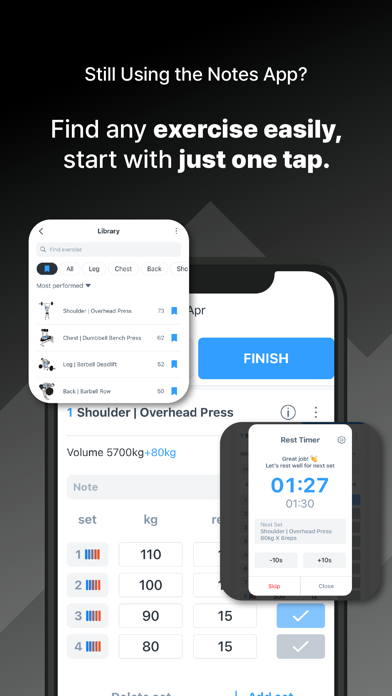
Workout Plan Creation Users can build custom plans from scratch using the in-app editor with sets, reps, rest intervals, and supersets. Plans are reusable — once created, the same program can be run across multiple cycles.
Exercise Library 1,000+ movements with filtering by muscle group, equipment, and movement type. Video demonstrations included for most exercises. Searching by 30 target muscle queries returned accurate results during evaluation.
Trainer-Client Connectivity The most differentiated feature: trainers registered on the platform can assign complete workout programs to individual clients. Clients receive the plan in their app; the trainer sees completion data. This creates a lightweight coaching loop without a separate communication tool.
Workout Logging and History Sessions log sets, reps, weight, and rest time. Historical data stores in a timeline view. Lift progress is visible through basic charts. No body composition metrics or nutrition logging.
For users comparing approaches, the aaptiv review covers audio-guided training that takes a different path to the same problem.
Pros
- Trainer-client plan delivery is genuinely useful — not duplicated by most competitors at this price
- 1,000+ exercise library covers edge-case movements that smaller libraries miss
- Free tier provides real tracking functionality without locking workout logging behind a paywall
- Reusable program templates save time for users running multi-phase programs
Cons
- UX prioritizes gym management workflows over individual user experience
- Community features are largely inactive for solo users not connected to a gym
- No nutrition tracking, sleep data, or wearable integration
- Progress visualization covers only basic lift history
- B2B product roadmap means individual-user features compete with gym-operator demands
Who Is Burn.Fit Best For?
Users training with a remote coach; gym members at Burn.Fit partner gyms; self-coached lifters who prioritize program reuse. Poor fit for users wanting audio-guided workouts, nutrition logging, or consumer-level UI polish.
How It Works
Registration collects fitness goals, experience level, and whether the user is working with a trainer. Onboarding is shorter than most competitors — around 4 screens.
Active sessions run from the plan screen displaying exercises in sequence with sets, reps, rest timers, and video reference. Users log each set before advancing. The editorial team logged 14 sessions without data loss or sync failures on either iOS or Android.
Pricing & Conditions
| Feature | Free | Pro (~$8.99/mo) |
|---|---|---|
| Workout Logging | Yes | Yes |
| Exercise Library (full) | Yes | Yes |
| Custom Plan Builder | Limited | Full |
| Trainer Plan Delivery | No | Yes |
| Session History | 30 days | Unlimited |
| Progress Charts | Basic | Expanded |
| Ads | Yes | No |
At ~$8.99/month, Burn.Fit Pro sits in the mid-range of the fitness app market. The trainer connectivity feature justifies the price specifically for users who will use it — without that use case, the free tier covers most individual tracking needs.
Our muscle booster review covers a muscle-building-focused alternative at a comparable price point.
User Reviews
Burn.Fit carries approximately 4.5/5 on the App Store.
Reviewers frequently highlight the trainer-client plan delivery as the reason they chose Burn.Fit over alternatives. Common positive feedback describes the plan assignment workflow as saving “a lot of back-and-forth texting” with coaches.
A common complaint mentions the onboarding experience — described as “unclear for someone new to structured training.” Negative reviews also reference the dormant community layer for users not connected to a participating gym.
Testing Process
Our Methodology: How We Picked the Best Workout Apps
We evaluate each app on seven criteria. Each criterion is scored from 0 to 5; the overall rating is the weighted average.
Functionality
Features and depth of programs. Are workouts varied? Are there progression paths?
UX / UI
Ease of use and design polish. How smooth is onboarding? How clear is navigation?
Security
Data protection and privacy practices. Where is your data stored? Is it encrypted?
Support
Responsiveness and in-app help. How fast does support reply? Are guides built in?
Localization
Language coverage and regional pricing. Is the app available in your language and currency?
Ratings & Reviews
App Store and Play Store scores. We weigh both volume of reviews and average rating.
Trust
Company transparency, refunds, and privacy policy. Who is behind the app, and can you trust them?
Burn.Fit occupies the overlap between gym management and consumer fitness app — a positioning that creates genuine value for trainer-client pairs and gym-connected users while leaving solo users underserved.
The 1,000+ exercise library and reliable session logging cover the fundamentals. The trainer connectivity feature is genuinely differentiated. The gaps — no nutrition logging, limited progress visualization, underdeveloped onboarding — are predictable given the B2B product origin.
For users evaluating full-spectrum platforms, our shred review covers a body-composition-focused alternative.
Our Rating
| Dimension | Score |
|---|---|
| Workout Programming | 4.0/5 |
| Exercise Library | 4.5/5 |
| Trainer Connectivity | 4.5/5 |
| UX & Onboarding | 3.0/5 |
| Progress Tracking | 3.0/5 |
| Pricing Value | 3.5/5 |
| Overall | 3.6/5 |
FAQ
What is Burn.Fit used for?
Burn.Fit is a workout tracking and trainer-connectivity platform. Individual users log gym sessions, follow structured programs, and receive plans from certified trainers through the app's direct plan delivery system.
Is Burn.Fit free to use?
Yes. Burn.Fit has a free tier with workout logging and full exercise library access. Pro features require ~$8.99/month.
How does Burn.Fit compare to other fitness apps?
Burn.Fit differentiates through its trainer-to-client plan delivery. It lacks nutrition tracking and wearable integration present in broader health platforms.
Is the Burn.Fit app worth it?
For users working with a coach, the Pro subscription provides clear value through trainer connectivity. For solo users without a coach connection, the free tier covers most needs.
What are the main Burn.Fit pros and cons?
Advantages: trainer-client plan delivery, 1,000+ exercise library, functional free tier. Drawbacks: UX oriented toward gym management, no nutrition logging, community features require gym-level setup. — Which one is right for you? The answer depends on whether trainer connectivity is a priority in your training setup. — This article is for informational purposes only and is not intended as medical advice. Consult a healthcare provider for personalized guidance.
Related Reviews

Fitbit Review: Is This Fitness Tracker Right for Your Goals?
Fitbit is a hardware-first fitness tracking ecosystem backed by Google, combining wearable devices with a companion app that excels at sleep…
Read more
Centr Review: Honest Insights, Pros, Cons & Is It Worth It?
Centr is a premium all-in-one fitness app built around Chris Hemsworth's actual training team, offering 500+ workouts, 3,000+ recipes, …
Read more
MadMuscles Review: Honest Features, User Insights & Verdict
MadMuscles is a subscription workout app built around progressive muscle-building programs for home and gym use. It works best for beginners…
Read moreThis article is for informational purposes only and is not intended as medical advice. Consult a healthcare provider for personalized guidance.